
Elbert County to consider 35-year development rights, tax rebate for Colorado Plains Ranch
The proposed agreement also includes a 20% personal-property-tax rebate for qualifying new businesses; a fiscal analysis projects $143.9 million in average annual Phase 1 taxes across the authorities it studied.
Published at
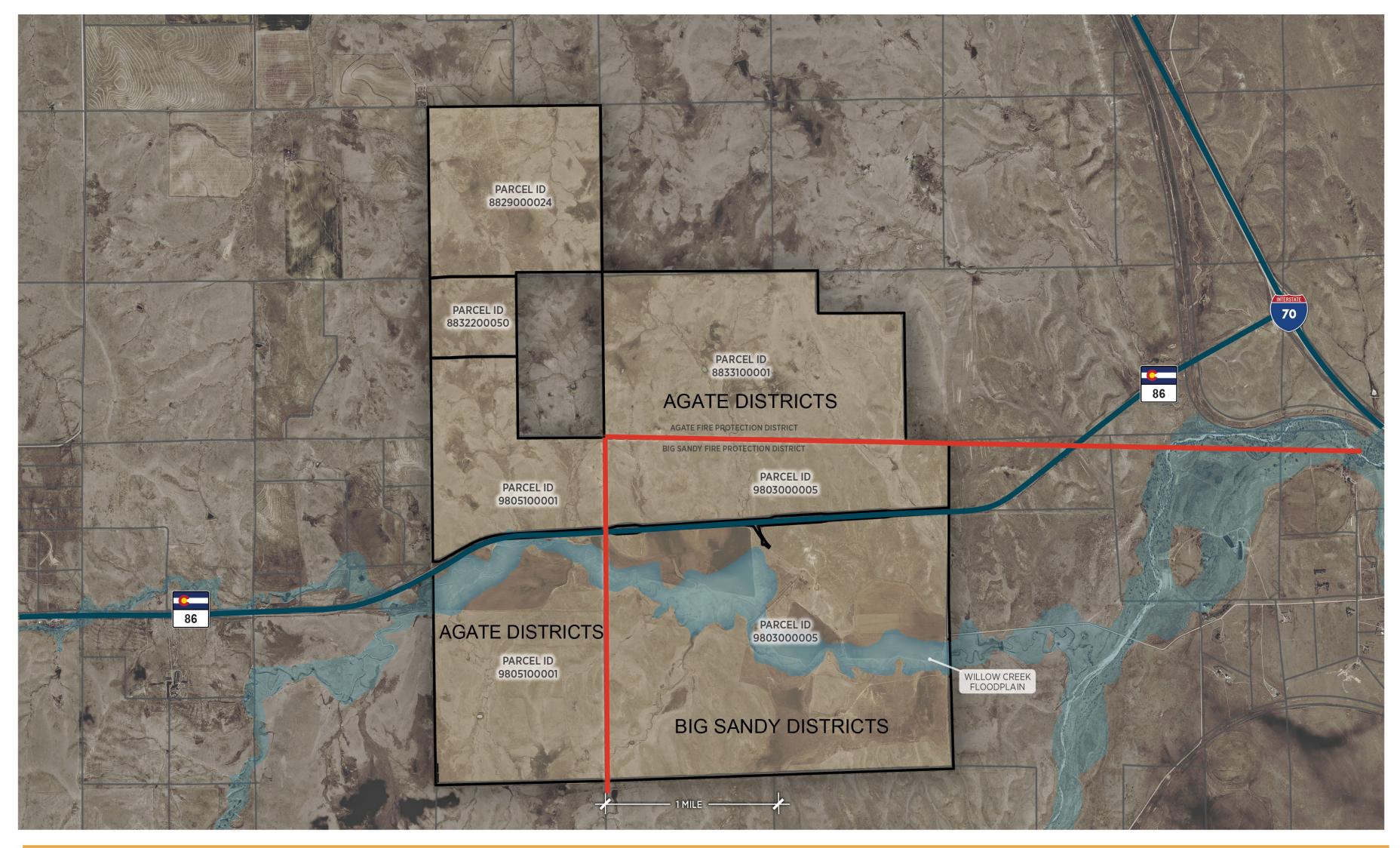
Elbert County commissioners are scheduled to consider a development agreement for Colorado Plains Ranch at 1 p.m. Wednesday, Nov. 18, in Kiowa. The draft would grant the proposed development 35 years of vested development rights and includes limits on data-center water and power use.
Ahead of the hearing, Beuck Land Co. and several residents have urged commissioners to delay or deny the proposal, raising concerns about water supply, traffic, infrastructure costs and the time available for public review. In a letter submitted by its attorney, Beuck Land Co. asked for a continuance and corrected notice, saying the application lacked a required traffic study and final water-supply determination, and that the draft development agreement had not been reviewed by the Planning Commission. The company said commissioners should deny the application if they proceed on the existing record.
Nearby property owner Shawn Golding asked commissioners to deny the rezoning or continue the hearing so affected residents could review final materials. He called for independent groundwater analysis, a certified traffic study, developer-funded road improvements and repairs, and binding funding arrangements for fire-service demands. Laura Atkins also urged denial and requested independent review of water supplies and public costs, including who would pay for roads, emergency response and other infrastructure.
Tricia Cardos asked for a continuance until key materials are publicly posted and available for review. She also called for a water-use cap and traffic and road protections. These are requests and claims by the commenters, not county findings.
The county’s draft agreement would start the 35-year term on a defined effective date, with day-for-day extensions for certain legal challenges and force-majeure delays. It also proposes a 20% rebate on business personal-property taxes for qualifying new businesses for 10 years. The fiscal analysis says Colorado Plains Ranch requested the rebate for 2028–2037 and estimates it would reduce county receipts by about $3.03 million a year, or $30.3 million total, if applied as modeled.
The draft requires data centers to use sealed, closed-loop cooling systems that reject heat without evaporation, with initial and replacement cooling water brought in from outside Elbert County. Each data and technology facility would also need on-site generation and storage capable of meeting its full operating load without relying on the regional grid as its primary power source. Later project plans would have to demonstrate compliance. Separately, the agreement limits project water use to groundwater legally available under state requirements. It estimates use of about 188 acre-feet a year based on the county’s 300-year supply measure, subject to well permits and other water-law requirements.
Economic & Planning Systems’ Phase 1 fiscal analysis models a 540-megawatt data center built in five 108-megawatt buildings from 2028 through 2032, alongside energy generation, solar and battery storage, warehouse space, biochar and continuing agriculture. It estimates $4.32 billion in taxes from 2028 through 2058, an annualized average of $143.9 million across the taxing authorities included in the report. The county’s modeled average is $81.5 million a year, after the requested rebate. The figures are projections based on assumptions about construction timing, property values, tax treatment and equipment replacement; actual receipts would depend on what is built and when.
The analysis projects average annual allocations of $46.5 million to school levies, $14.9 million to two fire districts and about $1 million to Upper Big Sandy Water District. EPS says additional general-levy revenue would increase school districts’ locally funded share and reduce state contributions toward per-pupil funding; bond and override revenue would remain local. The projected revenue therefore would not translate into an equivalent increase in every entity’s net resources.
The county agenda lists the planned unit development and development agreement as separate items in the same hearing block. The Planning Commission recommended approval of the development after its Nov. 4–5 hearing, by a 6–2 vote and subject to conditions that included review and approval of a development agreement.