
Shepherd Solar advances to hearings with road, traffic and safety work unresolved
Elbert County staff found the application sufficient to advance to hearings, but the proposed 199-megawatt solar and 100-megawatt battery project still needs additional road, traffic, fire-safety, wildlife and final-plan work. No final approval was documented as of Aug. 27.
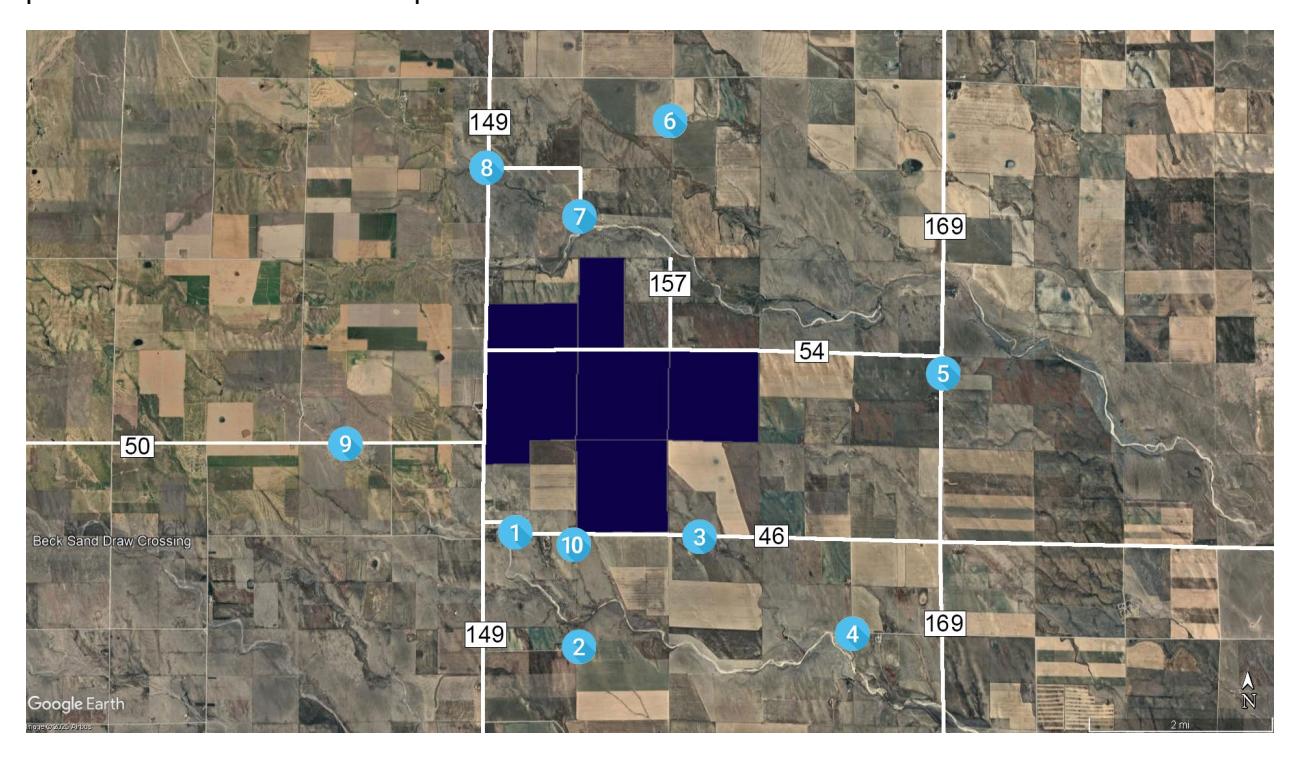
Elbert County staff found the Shepherd Solar application sufficient Aug. 7 to advance to public hearings, but the determination was not final approval. The proposed facility near Matheson still faces unresolved traffic, road, emergency-response, wildlife and final-plan requirements before construction can begin.
County referral materials describe the project as a 199-megawatt photovoltaic facility with a 100-megawatt battery energy storage system on about 1,990 acres. Preliminary civil drawings use different capacity figures — 309 megawatts of direct-current solar and 231 megawatts of alternating-current solar — without explaining whether they reflect a different design stage or establish a final project size. The second-referral materials also identify unresolved technical work, including traffic analysis, road agreements, emergency-response planning, final site and electrical plans, and additional civil designs.
As of Aug. 27, the hearings had not occurred. A county development-projects report dated Aug. 19 listed a Planning Commission hearing for 6 p.m. Sept. 1 and a Board of County Commissioners hearing for 1 p.m. Sept. 9, both at the Elbert County Agriculture Building in Kiowa. The county’s public notice scheduled both hearings as “Hearing/Decision.” Available records do not document a continuance, approval, denial or other action before Aug. 27.
Traffic review remains incomplete. A county engineering consultant said the application lacked a Level 2 turn-lane evaluation and Level 3 traffic-impact study. The project’s preliminary haul routes primarily use County Roads 169 and 149, with other county roads listed as possible alternatives. Public Works said hauling could affect about 30 miles of county roads and that routes must be confirmed and evaluated before a Road Use Agreement is signed.
Public Works also requested reconstruction of approximately 3.5 miles of County Road 54 between County Roads 149 and 169 to a gravel Local Road Type I standard. The work is intended to provide a secondary emergency route and improve travel options for residents, project workers and the surrounding community and school district, according to county referral materials. A separate Aug. 25 Public Works memorandum described the segment as about three miles.
The records include no cost estimate, county appropriation, state grant or other funding source for the reconstruction. They say the applicant would be responsible for project-related road improvements and repairs, with a bond or irrevocable letter of credit to be negotiated under county requirements. The amount and final terms are not documented, and there is no record that the road-condition surveys or Road Use Agreement have been completed or signed.
Big Sandy Fire Protection District said the proposed 30,000-gallon water cistern and pump combination would suffice for site water supply. The district also requires 20-foot all-weather emergency access roads, Knox access equipment at locked gates, and identification of fire access and project buildings on the site plan. Battery-safety documentation remains outstanding, including final information on the storage systems, fire suppression and detection, thermal management, emergency response and fire- and explosion-prevention design. The applicant has said those materials will be submitted before construction, but the final documents were not among the available records.
Colorado Parks and Wildlife did not identify mapped high-priority habitat overlapping the project, but it identified nearby conservation waters and potential habitat for mountain plover, burrowing owl, swift fox, raptors, pronghorn and mule deer. CPW’s referral recommendations call for seasonal limits on ground disturbance and vegetation clearing, preconstruction nest and wildlife surveys, buffers around active nests, burrows and swift fox maternal dens, wildlife-movement corridors 200 to 300 meters wide, wildlife-compatible fencing and bird-safe electrical infrastructure. The records do not establish that all of those recommendations will become enforceable permit conditions or that the surveys, corridor dimensions and fencing details are complete.
Other requirements include a 10-foot brush- and combustible-fuel-free perimeter around relevant facilities, final site and electrical plans, and additional civil-design information. The county staff report says construction cannot begin until required traffic, road, emergency-response and final-plan work is completed.
Public comments and community-meeting records document concerns about property values, equipment noise, wildlife, rural views, farmland, drainage, water, fire safety and decommissioning. The staff report said two public comments had been received by Aug. 25, including one opposition comment, and that no referral agency had an outstanding objection. The comments are public input, not decisions by the county’s governing bodies.