
Colorado Plains Ranch draft plans model bonds above debt limits
The water and sanitation district’s hypothetical schedule lists $214.3 million in bonds against a stated $143.4 million limit; seven exhibits also list a 58-mill adjusted maximum.
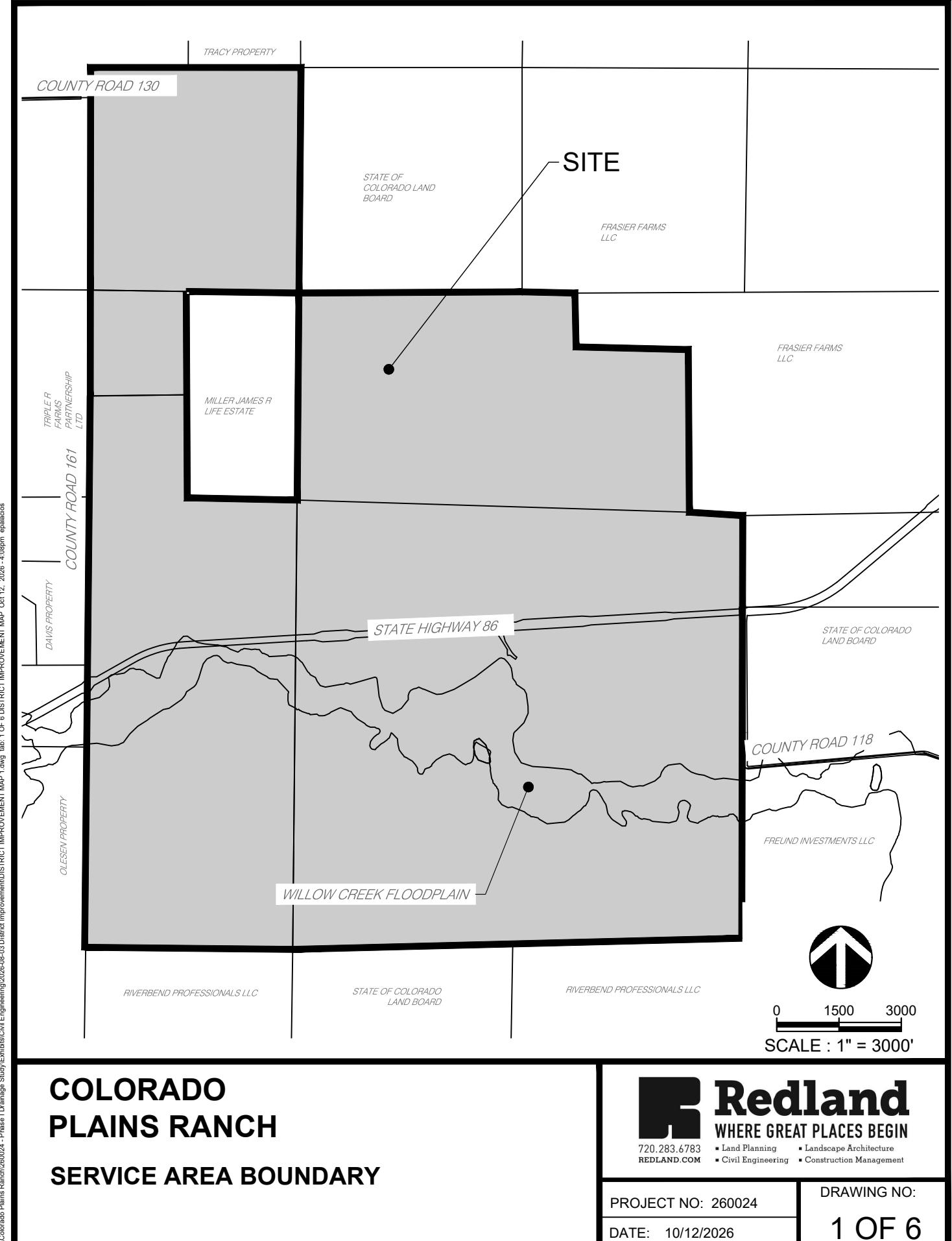
Published at
Draft financing plans for two proposed Colorado Plains Ranch metropolitan districts include hypothetical bond schedules with amounts above the plans’ stated debt limits. The water and sanitation district’s schedule lists $214.302 million in proposed 2028 bonds, $70.902 million more than its stated $143.4 million limit, the draft plan says.
A draft for Colorado Plains Ranch Metropolitan District No. 1 states an aggregate debt limit of $446.4 million. Its attached schedule lists two proposed 2028 bond issues totaling $1.56746 billion. But the schedule names “Colorado Plains Metropolitan District,” not District No. 1, so the comparison does not establish that District No. 1 itself would issue that amount. The plan describes the schedule as a hypothetical example and lists roads, highway access, bridges, rail, water and wastewater systems, stormwater work and other infrastructure among the improvements it could finance. The District No. 1 draft plan estimates improvements at about $500 million; its engineering table totals $491.5 million, including $367.5 million in direct costs, $50 million for planning and related services, and $74 million in contingency.
Numerical-plan exhibits attached to seven draft plans — for Districts Nos. 1–4 and the Commercial, Industrial and Transportation districts — list a 50-mill base and a 58-mill “adjusted maximum.” The exhibits also identify “Colorado Plains Metropolitan District” as the bond issuer, without “Ranch” or a district number. The exhibits for District No. 2, District No. 3, District No. 4, the Commercial District, the Industrial District and the Transportation District show the figures.
The plans generally cap the debt-service levy at 55 mills while aggregate debt exceeds 50% of assessed valuation, subject to adjustments for specified changes in assessment methods and mandated tax credits, cuts or abatements. They also say the cap does not apply to debt issued when the debt-to-valuation ratio is at or below 50%; the levy for that portion may be set at the amount needed for debt service. The water and sanitation draft estimates improvements at about $120 million. Its engineering table assigns $119.5 million to water supply and treatment, wastewater and reclaimed-water categories, while totaling $491.5 million across a broader set of infrastructure, the draft plan shows. Neither draft allocates the broader costs among the districts, and the table does not establish that each would build or finance the full amount.
The applicant’s Oct. 28 response said the districts would borrow only what they need for public improvements, the response says. It did not explain how the 58-mill adjusted maximum relates to the plans’ levy provisions.
The plans describe financing and improvements the districts could pursue if approved; they do not establish county approval, completed district formation, actual tax levies or bond issuance. The Planning Commission agenda schedules a Nov. 4 public hearing on the service plans and a separate hearing on the proposed planned unit development. County staff say approval of a service plan, or another water-and-wastewater service mechanism, is required before approval of a site development plan. A Board of County Commissioners hearing on the development is scheduled for Nov. 18, the county agenda packet lists.