
Colorado PUC record puts revised Xcel rate increase at $157 million
Commission staff estimated average monthly increases of about $5 for residential customers and $7.29 for commercial customers, but the written decision and effective date remain pending.
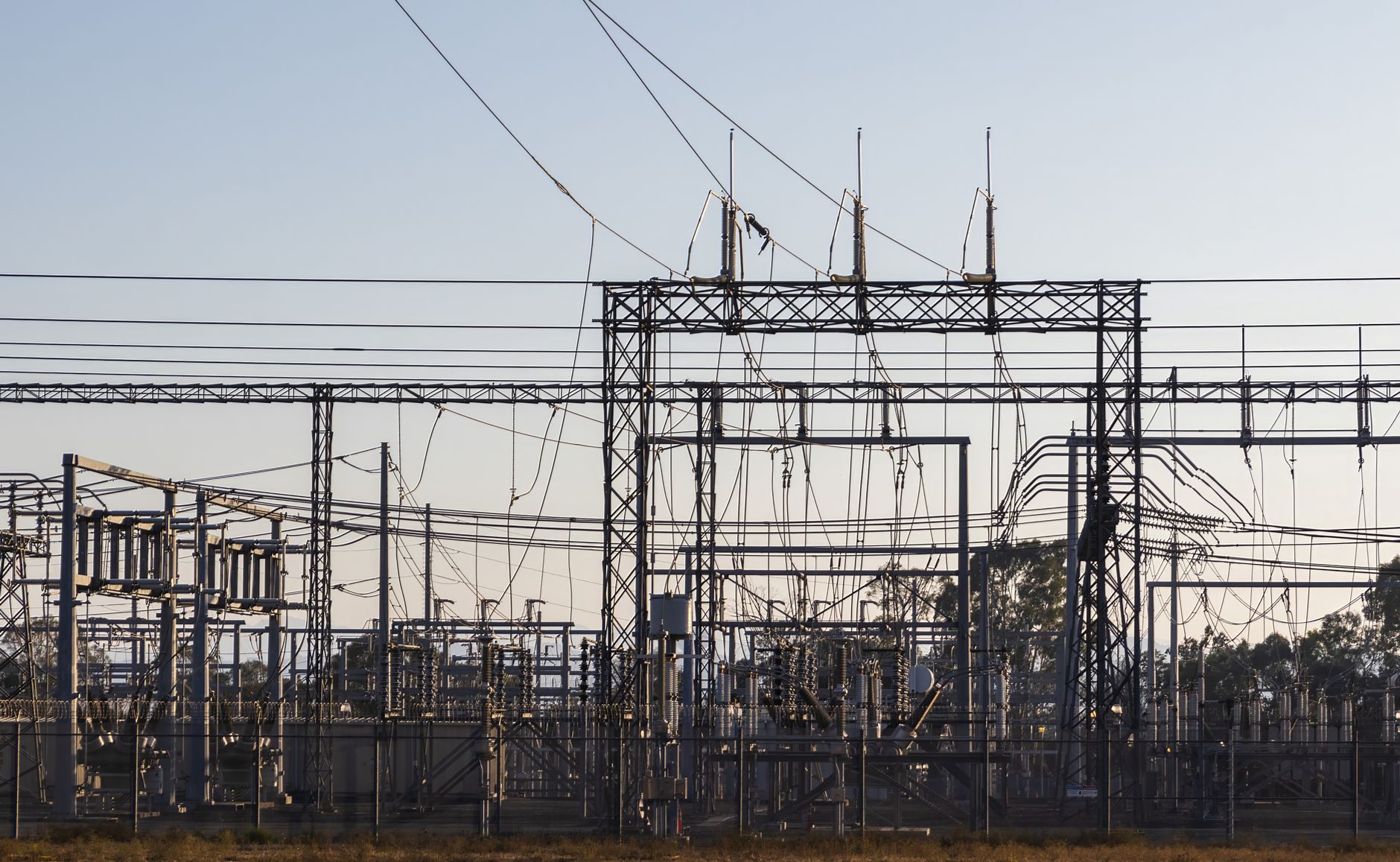
A Colorado Public Utilities Commission record puts Public Service Company of Colorado’s revised electric revenue-requirement increase at $157 million, with estimated average increases of about $5 per month for residential customers and $7.29 for commercial customers. The commission has not issued a written final order or set an effective date for the revised rates.
Xcel electric-rate proceeding
In case 25AL-0494, Public Service initially sought a $356 million annual base-rate increase. After an Aug. 17 technical conference, the company filed revisions to its cost-of-service study Aug. 18. At the commission’s Aug. 19 meeting, staff described the result as a “final revenue requirement increase” of $157 million. The Aug. 19 commission meeting record says the revisions used a 13-month average rate base, excluded certain annualizations and removed $66,000 in membership dues identified as related to political lobbying.
The figure differs from the $217.8 million modified-settlement figure reported after the commission’s Aug. 5 meeting. The Aug. 19 record refers to changes to the settlement and a decision modifying it, but does not explain whether the $157 million formally supersedes or replaces the earlier figure. The available record also does not provide an order number, issuance date, effective date or tariff-filing date.
Staff estimated that the revised increase would raise an average residential customer’s bill by about $5 per month, or 4.77%, and an average commercial customer’s bill by $7.29 per month, or 4.64%. Those are average-bill estimates; the record does not provide a more detailed usage or rate-class methodology. The PUC’s electric-rate-case page still lists an earlier proposed $225 million increase and a typical residential increase of 5.86%, or about $6.13 per month. That estimate predates the revisions and should not be treated as the final customer impact.
Commissioners questioned whether Public Service’s capital spending is growing faster than its sales and revenue base. One commissioner said spending rose from $1.6 billion in 2021 to $5.4 billion in 2025 despite declining total sales, and that the company proposed nearly $6 billion in spending for 2026. The commissioner said total revenue requirements and rates, including riders, grew 7% to 8% annually from the end of the 2022 rate case through 2025, compared with 3.30% annual inflation, and warned that continued growth could make electricity unaffordable for some customers.
The commission had reserved Aug. 19 for another technical conference if the revised filing required one. Staff said the company had complied with the commission’s directives and that another conference was unnecessary. Completion and issuance of the written decision are the next major steps identified in the record.
The proceeding also addresses affordability, reliability, wildfire-related costs and planned transmission spending. An earlier record cited nearly $8 billion in projected transmission capital spending from 2026 through 2030. The commission directed more detailed project-level reporting in Public Service’s October 2026 transmission cost-adjustment filing, including budgets, actual costs and amounts assigned to adjustment mechanisms.
The proposed settlement included a $5 million one-time contribution to enhance the Energy Assistance Program and Percentage of Income Payment Program, outreach and protections against involuntary disconnection for customers referred through LEAP, Energy Outreach Colorado or the state assistance system, even if they were not yet enrolled. The commission also directed staff to study disconnections in disproportionately impacted communities and asked Public Service to file an application or advice letter by June 30, 2027, on a disconnection and bill-assistance pilot or related review.
Commissioners supported retaining a Pueblo Unit 3 performance framework that could impose penalties for poor availability. Moving certain Pueblo-related costs into future adjustment mechanisms did not establish that the costs were prudent; the record says prudence would be reviewed later. The commission also supported an early review of a dispatchable-capacity performance incentive mechanism, including unit-level spending, performance and incentive or penalty results.
Other proceedings
911 charges. Staff proposed a 16-cent monthly state surcharge per access connection, a $2.26 threshold for local emergency telephone charges requiring PUC approval and a $2.43 charge on each prepaid-wireless retail transaction. The amounts are not final. Comments are due Aug. 28, responses Sept. 11, and the commission plans to issue an order by the statutory Oct. 1 deadline for charges taking effect Jan. 1, 2027.
The state surcharge would appear on monthly telecommunications bills. Sellers would collect and remit the prepaid-wireless charge, Colorado Department of Revenue guidance says. Local governments seeking a charge above the proposed threshold would need commission approval.
Heat-pump pilot. The commission allowed Public Service to put a voluntary residential electric space-heating rate pilot into effect Aug. 1. The pilot is for customers who use a heat pump as their primary heat source and is expected to include about 3,000 participants during the 2026-27 heating season. It pairs a higher seasonal service-and-facilities charge with a lower off-peak electric rate from October through May.
Xcel plans to gather information about electricity use and system impacts before filing a permanent heat-pump rate Aug. 1, 2027. Conservation Advocates and local-government groups raised concerns but did not seek to suspend the pilot or hold a hearing. The record does not establish customer savings, utility revenue changes or broader bill effects.
Flexible-grid tariffs. In a separate Xcel filing, the commission suspended proposed flexible-interconnection and flexible-energization tariffs that were set to take effect Aug. 1 and referred the case to an administrative law judge. The proposals addressed distributed-energy projects and controllable loads that could not receive full service, or service on the requested schedule, because of distribution constraints or needed upgrades. The referral does not determine whether the tariffs will be approved, changed or rejected.
Utility-connection rules. The commission opened an administrative-law-judge-referred rulemaking to implement Senate Bill 24-218 and House Bill 26-1225. The proceeding covers distribution-system planning, energization timelines, interconnection, customer cost caps, third-party contractors, utility cost recovery and performance metrics for large utilities.
Meeting concepts included a 30-day average and 90-day maximum energization target, a potential $300-per-unit cap for affordable-housing upgrades, zero-cost caps for some residential electrification projects and rules allowing third-party contractors to perform interconnection studies. Those are concepts in a new rulemaking, not rules in force; final costs, timelines and eligibility will depend on the adopted rules and later utility filings.
Incremental-capacity public comment. The commission scheduled remote public-comment hearings for Sept. 22 from 4 to 6 p.m. and Nov. 4 from 11 a.m. to 1 p.m. in case 26A-0235E, Public Service’s application for incremental-capacity resources to address 2027 and 2028 resource-adequacy needs. Proposals include accelerated construction of Fort St. Vrain gas-fired units 7 and 8, repairs to Hayden Unit 2, extensions of certain power-purchase agreements and extending Pueblo Unit 2’s retirement date to March 31, 2028. The dates are scheduled events, not completed hearings; the record does not specify a time zone.